Who Owns an AI Voice? Consent, Licensing, and the Future of Voice Talent
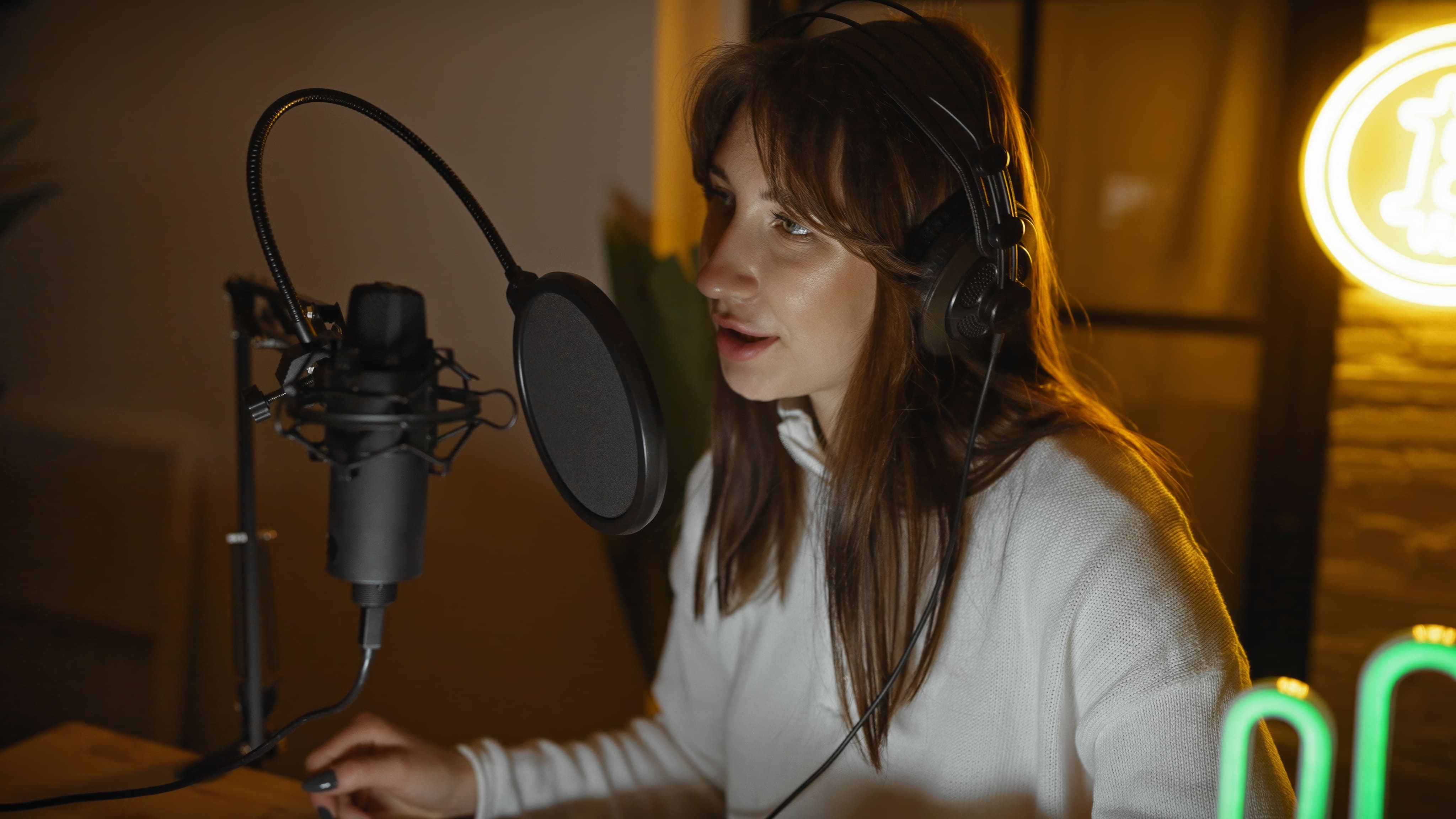

We know a familiar voice when we hear one. But what if the person behind that voice never said the words?
That possibility is becoming increasingly real as voice AI advances. It also raises complicated questions about ownership, consent, and compensation. What happens when a synthetic voice resembles a real person? Who has the right to use it? And what role should voice talent play in the AI models built from their recordings?
These questions were central to our recent DataForce Live discussion on the future of voice AI. During our webinar, Dorota Iskra spoke with voice AI experts Monika Podsiadlo and Andrew Breen about the rapid evolution of text-to-speech, the changing role of training data, and the growing importance of consent, licensing, and voice identity.
As the technology matures, organizations will need clear frameworks for how voice data is sourced, used, licensed, and protected.
A Voice Carries More Than Words
Accent, rhythm, tone, emotion, speaking style, pacing, and vocal identity all contribute to how a person sounds. In many cases, these characteristics are distinct enough that listeners can immediately recognize who is speaking.
That creates a unique challenge for voice AI.
When a model generates synthetic speech, it can reproduce or approximate characteristics associated with real individuals. As models become more capable, the question shifts from “Does this output sound natural?” to “Could this output reasonably be perceived as someone else's voice?”
This becomes especially important when models are trained on very large collections of speech data.
Large Datasets Come with New Risks
Modern voice AI models are often trained on enormous volumes of audio. That scale can help capture a broader range of speaking styles, accents, and conversational patterns. It can also make it more difficult to understand exactly which voices are represented in the data and what rights are attached to them.
During the webinar, Andrew highlighted the risk that generated speech can drift toward another voice, particularly when a model has limited reference data for the identity it’s trying to reproduce. He also noted that as the underlying dataset grows, it can become harder to demonstrate that a generated voice doesn’t resemble someone represented within it.
This introduces both technical and intellectual property concerns.
A company may have no intention of recreating a particular person's voice, but unintended likeness can still occur. If a listener reasonably believes that a generated voice sounds like a specific individual, that can create legal, reputational, and ethical risks.
This is why data provenance is critical. Organizations need visibility into where voice data originated, how it was collected, and what permissions were granted for its use.
Consent Needs to Be Built into the Process
For voice AI projects involving identifiable voice talent, consent should be established before data collection begins. Participants should understand what they’re recording and how the resulting data may be used.
A strong consent framework should make clear:
- Whether recordings will be used for AI training or fine-tuning
- Whether a synthetic voice may be created from the recordings
- Which applications the resulting voice may support
- Whether the model can be licensed or distributed to third parties
- How long the recordings or model may be used
- How the voice talent will be compensated
- What limitations apply to future use
Clear agreements can reduce ambiguity later in the model lifecycle and help organizations avoid relying on audio that was never intended for AI development. They also create greater transparency between model developers and the people whose voices make the technology possible.
Will Voice Talent Be Replaced by AI?
One of the most common concerns surrounding generative AI is its impact on creative professions. As synthetic speech becomes easier to generate, some voice talent may worry that AI will reduce demand for human recordings altogether.
But that doesn’t have to be the outcome.
During the webinar, the panelists discussed an approach in which professional voice talent actively participates in the development of synthetic voice technology and is compensated for the use of their voice.
A voice actor could knowingly provide recordings for model training or fine-tuning, with the synthetic voice clearly associated with that individual. Usage rights and licensing terms would be defined in advance.
This approach can better align the interests of AI developers and voice professionals. Licensing structures can give talent an ongoing role in the value created by AI-generated voices rather than removing them from the process.
Licensing Could Become a Core Part of Voice AI
Licensing will likely play a larger role in managing voice identity as the technology moves into more commercial applications. A clearly licensed voice gives developers a more controlled foundation for building synthetic speech products.
Organizations can work with specific voice talent, collect purpose-built recordings, and define how the resulting model may be used.
Potential benefits include:
- Clearer usage rights
- Better control over voice identity
- Greater consistency across outputs
- Higher-quality training data
- Better alignment with professional voice talent
- Reduced uncertainty around likeness and IP
This is particularly important for applications where a specific or consistent voice matters, such as entertainment, games, audiobooks, branded assistants, or long-form content.
High-Quality Voice Data Supports Ethics and Performance
In the webinar, Monika emphasized the value of high-quality, well-annotated datasets for controlling voice identity and expressivity for a specific use case.
Purpose-built recordings give development teams more control over what a model learns. Rather than depending on massive, ambiguous datasets, organizations can deliberately collect the characteristics they want the model to reproduce, from specific emotions and conversational styles to accents, pacing, and domain-specific terminology.
Detailed annotations can then help models understand how those vocal characteristics should be reproduced. The result is a dataset that is easier to govern and more closely aligned with the intended application.
Voice Identity Will Become a Product Decision
As voice AI models become more sophisticated, organizations will need to treat voice identity as part of product design.
Before building or deploying a synthetic voice, teams should consider several questions:
- Does the application require a consistent voice identity?
- Is the voice tied to a real person, and what rights do we have to use it?
- How was the training data sourced?
- Has the talent consented to the intended applications?
- How will compensation and licensing work?
- How will the risk of unintended voice likeness be addressed?
- Can the data and permissions be documented throughout the project lifecycle?
Addressing these questions only after a model has been trained can create unnecessary risk and make it much harder to determine whether the resulting voice can be safely deployed.
Building a Responsible Future for Voice AI
The continued evolution of voice AI will bring new questions around consent, licensing, data provenance, and ownership.
Professional voice talent has an opportunity to remain part of this evolution, with clear agreements that give individuals control over how their voices are used and a stake in the value they help create. Purpose-built, high-quality speech data can also give development teams greater control over model performance and voice identity.
The technology may be synthetic, but the voices behind it are human. Building the next generation of voice AI means respecting that distinction from the start.
Ready to build human-like conversational AI? Explore our voice AI services or contact us today to learn how DataForce can support your voice AI model.
Want to hear the full discussion? Watch the webinar.
By The DataForce Team